
Dreams, Dread and Promises Low Days Must Keep

2 hours ago
4 min read

An exhibition opening lasts about three hours. On the calendar, it looks like a small square, one evening among many. For me, that square has edges that spill far beyond it. I have written before about the months of preparation and worry that come before a show. This time I want to talk about what people never see: what happens to me while I am standing in the room, and what happens afterwards, once everyone has gone home.
A sponge in a crowded room
The best image I have found is a sponge. When I walk into a crowded place, I absorb the emotions around me. A visitor’s enthusiasm, a friend’s nervousness, the polite boredom of someone who came only for the drinks, the sadness a stranger is carrying and trying to hide. I feel all of it, and I cannot choose what comes in.
A sponge has no filter. It doesn't take only clean water. It takes everything, and it grows heavier with each minute. By the end of an evening, I am saturated, and the smile I wear next to my paintings is costing me far more energy than anyone in the room imagines.

The evening that lasts for months
What surprises people most is the aftermath. If an event touches me emotionally, whether it goes well or badly, the feelings don't leave when the lights go off. A kind word can carry me for weeks. A careless remark can stay lodged in my mind for months. I replay conversations, faces, glances.
So when I count the cost of an exhibition, I no longer count only the venue, the catering and the invitations. I count the recovery too. A sponge has to be wrung out, and that takes time. The weeks I need after an event are not lost weeks. They are part of the price of showing my work, and I have learned to include them from the start.
Dreams sized by the mood of the day
As an artist with bipolar disorder, I have noticed something about my ambitions: their size depends on the day I imagine them. On a high day, I could plan an exhibition in North Korea and find it easy. Every door looks open, every project looks reasonable. On a low day, opening the door of my own studio can feel like an expedition.
The danger is that high days make promises that low days have to keep. The dream is born in one mood and lived in another. This is what makes my mood swings so hard to handle: they often give me a false sense of reality. When my mood is high, my judgment feels perfectly clear. I see the finished exhibition, the paintings on the walls, the visitors, the success. I don't see the effort, the doubts, or the exhaustion. Everything seems not only possible but simple. I may decide to do a solo exhibition in that state of mind. But a solo show can take up to a year to put on, and in a year my mood will change many times. The person who said yes is rarely the person who has to do the work. Months later, on a low day, I find myself facing a commitment made by a version of me who seemed to know nothing about how hard it would be. I feel as if a stranger signed a contract in my name, and now I must honour it.
The truth is that neither version of me sees reality fully. The high days are too optimistic, and the low days too dark. Somewhere between them is the project's real size, and the real size of what I can carry. Learning to see that middle ground, and to make decisions from it, is one of the hardest lessons of my life.
I think this is why so much of my life feels like a duality. I dream of a solo exhibition abroad and dread it in the same breath. I want the Zafer style to be known far beyond Mauritius, and I know the mountain of work this would require. Both feelings are honest. Neither one alone tells me what to do.

A compass instead of a mood
So how do I decide what to attempt? I have learned not to let the mood of the day choose for me. Instead, I return to the three reasons I paint and use them like a compass.
First: to keep developing a style that is truly my own.
Second: to paint for my well-being, because the Zafer style has been my way of coping for over twenty years.
Third: to live from my art.
When a dream and a dread collide, I ask which choice serves those three goals. Sometimes the answer is a solo exhibition, with all the stress it brings. Sometimes it is a smaller step: one new gallery contact, one painting sent abroad. A compass does not shorten the road. It only stops me from walking in circles.
Wringing out the sponge
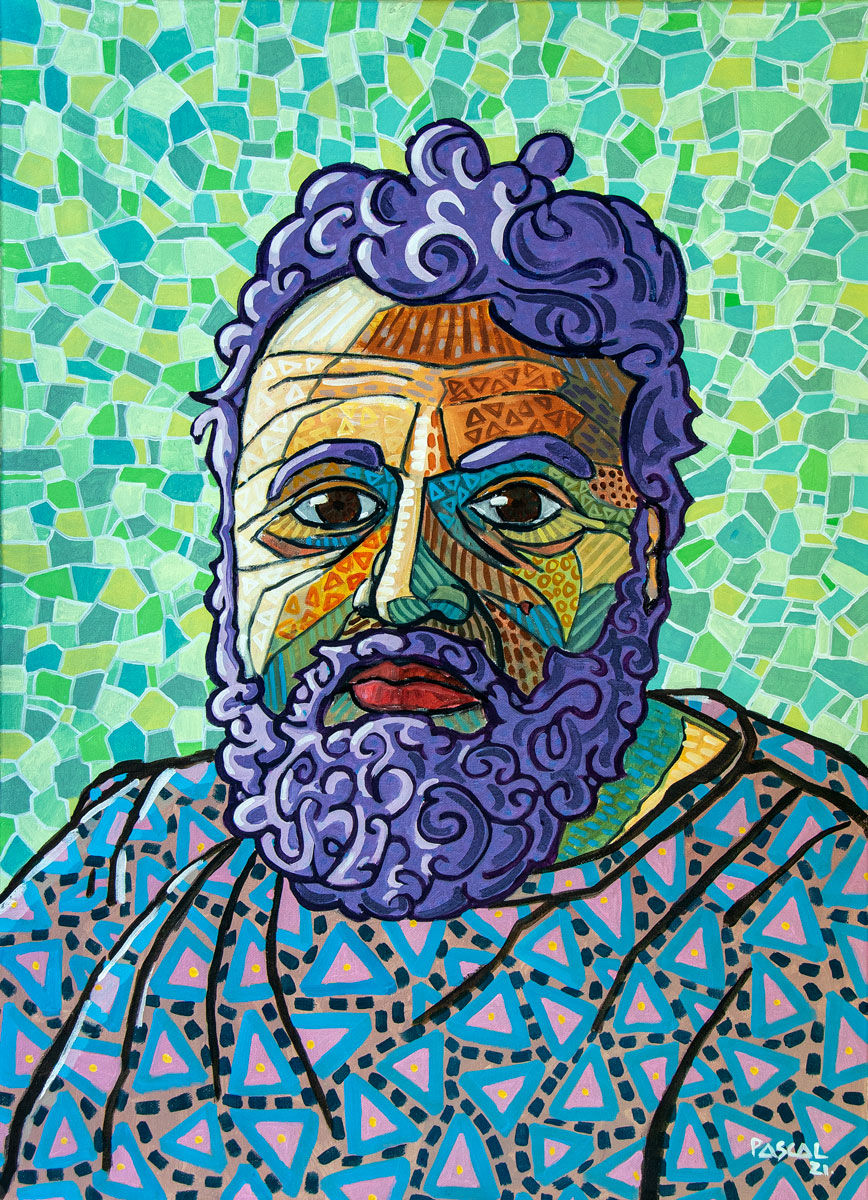
I cannot change the brain I was given. But the same sensitivity that drains me in a crowded room is what notices everything worth painting. The emotions I absorb have to go somewhere, and more and more, they go onto the canvas.
Maybe that is the real answer to the duality. The dream and the dread will always travel together. What I can choose is what I do with everything I absorb along the way.


Comments